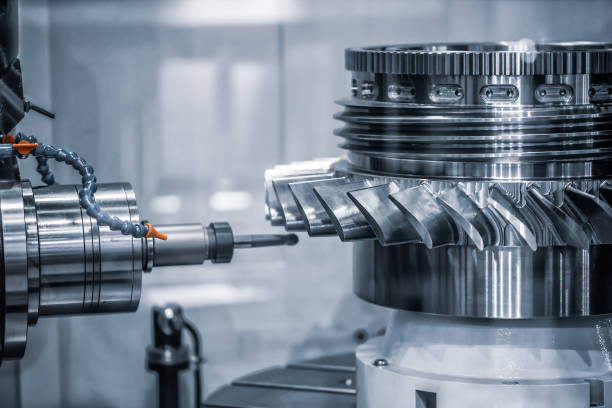
In today's fast-evolving industrial landscape, the demand for precision machining tools has never been higher. Manufacturers seek reliable equipment that not only delivers accuracy but also withstands the rigors of repetitive use. Among the standout advancements in cutting technology are the PCD diamond-tipped drills, which have garnered attention for their unparalleled toughness and efficiency. These tools are rapidly transforming drilling processes in various sectors, from aerospace to automotive manufacturing.
PCD, or polycrystalline diamond, coatings on drill tips offer superior hardness compared to traditional materials. This feature enables drills to maintain sharpness and precise cutting performance over extended periods. The following sections delve deeper into the mechanics, applications, and benefits of these state-of-the-art drills.
The Science Behind PCD Diamond-Tipped Drills
At the core of PCD diamond-tipped drills lies the use of synthetic diamond particles bonded together to create a polycrystalline structure. This structure provides significant resistance to abrasion and heat, two common challenges that conventional drills face during intensive operations. The diamond layer is usually bonded onto a tungsten carbide substrate, combining toughness with durability.
This composition allows these drills to cut through hard and abrasive materials like composites, aluminum alloys, and even carbon fiber-reinforced plastics with exceptional ease. Additionally, the thermal conductivity of diamond helps dissipate heat swiftly, reducing wear and increasing tool lifespan. Such factors make the pcd diamond-tipped drills a highly efficient solution for demanding production environments.
Industrial Applications Driving Demand
Industries that rely heavily on precision drilling have embraced PCD diamond technology for its unmatched performance. In aerospace manufacturing, where lightweight composite materials are prevalent, traditional drilling tools often struggle, resulting in delamination or premature tool failure. PCD drills reduce these risks by delivering clean, precise holes without compromising material integrity.
Similarly, the automotive industry benefits from faster cycle times and reduced downtime due to the longevity of PCD-coated drills. Electronics manufacturers also find value in these drills when working with fragile PCB materials and high-volume drilling tasks. Across these fields, employing PCD diamond-tipped drills translates to higher productivity and lower maintenance costs.
Enhancing Efficiency and Cost-Effectiveness
The initial investment in PCD diamond-tipped drills can be higher than for conventional alternatives. However, their lifespan and performance yield considerable savings over time. These tools maintain cutting sharpness far longer, reducing the frequency of replacements and associated machine downtimes.
Moreover, the precision drilling offered minimizes the need for secondary finishing operations, which further streamlines production workflows. Manufacturers adopting these drills report improvements in both component quality and overall operational efficiency, reinforcing the value proposition of polycrystalline diamond technology in cutting tools.
Understanding Tool Manufacturing and Material Science
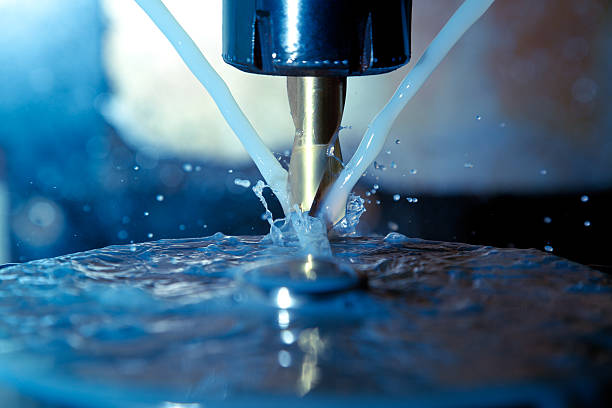
The manufacturing process of these advanced cutting tools involves sophisticated material science and precision engineering. Creating the diamond layer requires high-temperature and high-pressure synthesis techniques, ensuring the polycrystalline diamond adheres strongly to the substrate. This process results in a robust, uniform surface capable of enduring harsh machining conditions.
For those interested in the intricate steps and technology involved in crafting such high-performance equipment, the details can be explored further through resources on how a tool is made. Understanding the manufacture enhances appreciation for the innovation embedded in PCD diamond-tipped drills and their impact on modern manufacturing.
Final Words on Advancing Drilling Technology
PCD diamond-tipped drills represent a significant leap in drilling technology, marrying material science with industrial necessity. Their ability to deliver precision, durability, and efficiency makes them indispensable in sectors demanding exceptional quality and performance. As manufacturing requirements grow increasingly complex, the reliance on such advanced tooling solutions will undoubtedly expand, driving further innovation and adoption.
Ultimately, embracing PCD diamond-tipped drills offers manufacturers a strategic advantage. These tools not only enhance productivity but also contribute to consistent, high-quality output essential for competitive markets. The future of precision drilling looks bright, firmly anchored by the cutting-edge capabilities of PCD technology.

.jpg)


Ei kommentteja:
Lähetä kommentti